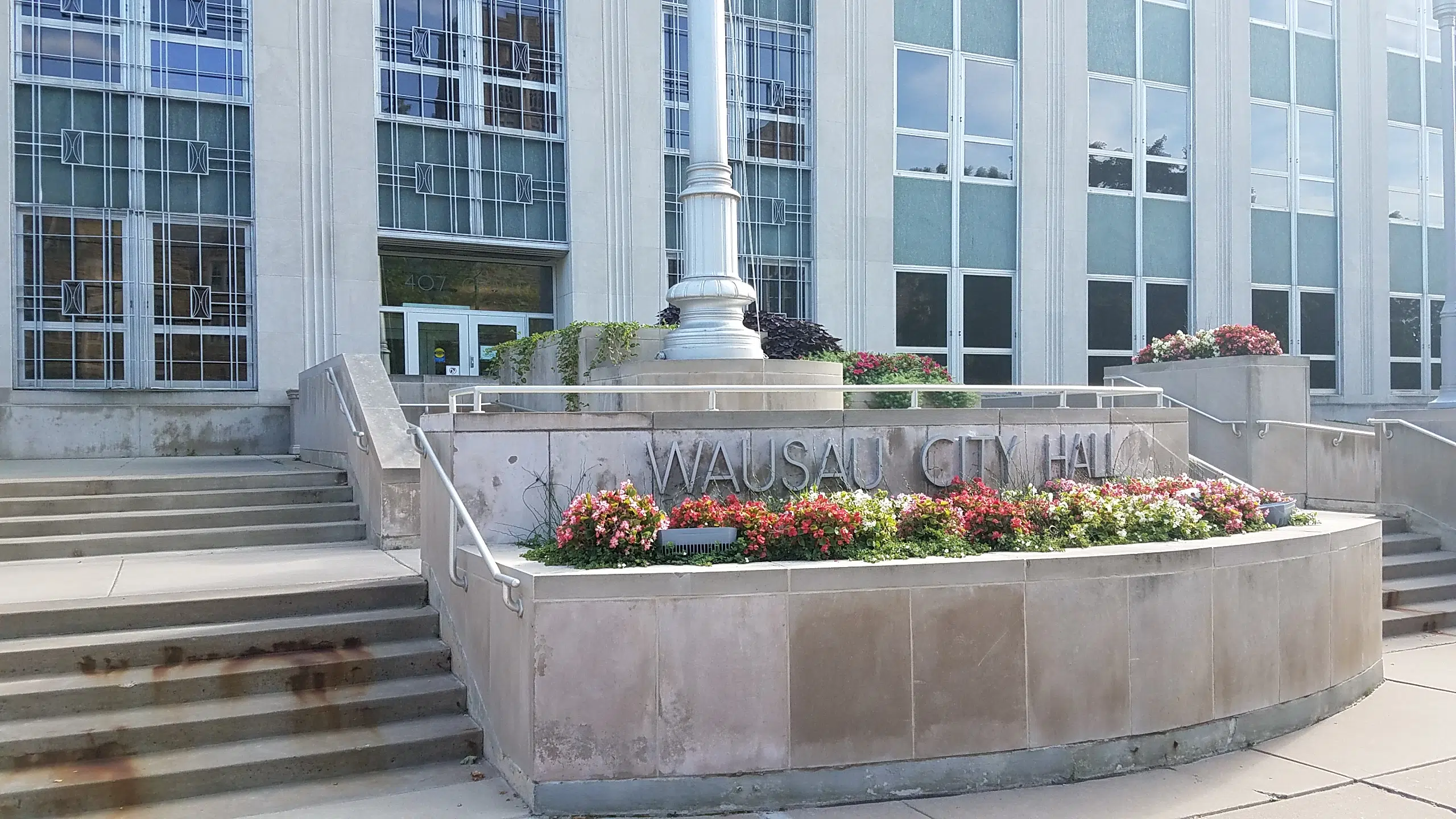
Wausau City Hall. MWC file photo
WAUSAU, WI (WSAU) — Tuesday night was the first of what is likely several meetings regarding the environmental status of the site at 1300 Cleveland Avenue.
Wausau’s City Council met for just over two hours on Tuesday night in a Committee of the Whole meeting regarding the future of a parcel of land at 1300 Cleveland Avenue. The meeting began with council members hearing a presentation from GEI, a science and engineering consulting group, regarding soil and groundwater samples taken around the parcel in October of 2020.
The key takeaways the GEI consultants presented to the council from the samples taken included that any contaminants of concern (COC) identified at the site are common among most urban brownfield sites. Some of those COC’s include metals that can either naturally occur in the soil or be manmade and fossil fuel residues, consistent with the parcel’s industrial past and the road next to the parcel.
The most prevalent COC found in the soil and groundwater samples from the fall was a metal called thallium. Thallium is a rare metal that naturally occurs in rocks or can be a byproduct of electronics production or coal combustion residue. When asked about the level of thallium found in the soil samples by District 3 Alder Tom Killian, DNR Hydrogeologist Matt Thompson confirmed that the thallium levels were above a certain state standard.
“Could the DNR please confirm for us this evening that levels of thallium found in the soil of a city-owned property at 1300 Cleveland Avenue exceeds state regulatory standards specifically non-industrial contact standards? ‘Yes.’ Thank you,”.
In discussing the thallium levels found in the soil and groundwater samples at 1300 Cleveland Avenue, some council members wondered if the metal was a natural occurrence in the area or from a manmade source like former property owner Connor Forest Industries. Thompson says there isn’t enough data at this time to tell where the source is from.
“Our recommendation to the City and to its consultant comes in where we’ve asked them to take additional samples from native material. So if you look at the soil borings we can identify rock flour (a gray to gray-brown silty fine sand) to a certain depth. We’ve asked that they go back out and take soil samples from below that. And that will help us determine maybe where the source of that thallium is coming from.”
Following the presentation from GEI and the DNR, the city council heard over 15 minutes of public input on what to do next with the land at 1300 Cleveland Avenue. Many residents made it clear- they want the city to consider affordable housing for the site and to rezone the parcel as a residential parcel.
The parcel is currently zoned as a medium industrial parcel in the most recent version of the city’s zoning map updated in 2019. The parcel was mapped using its historical zoning district from when it was an industrial site. The City’s Plan Commission is working to rezone the property as a residential parcel.
In the last portion of the meeting, the council discussed the plan forward with the property to determine its potential use and possible contamination mitigation efforts. The council discussed that any action on the property is in the very early stages of a Phase 2 environmental investigation. The next step for the site in that investigation is that GEI, the City, and the DNR will work on a site investigation workplan to decide on the next field efforts.
When more information becomes available on the investigation workplan, council members will hold another Committee of the Whole meeting to receive updates from City leaders, GEI Consultants, and the DNR.





Comments